3 Matcha Kettles Tested: Accuracy & Control
By Ava Osei • 15th Feb
Why Matcha Demands Precision Water Temperature
Matcha is unforgiving when water temperature veers even 5°C off target. Below 70°C, the powder dissolves sluggishly and the brew tastes thin and grassy. Above 80°C, the ceremonial-grade leaves scald, releasing bitter compounds that mask the umami sweetness you paid for. This isn't theory, it's chemistry. Incorrect water temperature will absolutely compromise and most likely ruin your cup of matcha, much as it does with green tea[2].
The catch? Most standard kettles offer no temperature visibility. You boil, guess, wait, and hope. A friend once swore ceremonial matcha tasted chalky no matter the source. We borrowed a variable-temperature kettle, set it to 75°C, and poured gently. Their face said everything at the first sip. Precision didn't kill the ritual; it saved it, cup after cup, like clockwork.
This guide walks through three approaches to matcha kettles, each tested for the accuracy and stability that separate good matcha from disappointment.
FAQ Deep Dive: Choosing Your Matcha Kettle
What Temperature Should I Use for Matcha?
Matcha preparation typically requires water between 70°C and 80°C (160-175°F)[3]. Ceremonial grades (the highest quality) sit at the lower end: 70-75°C. Culinary matcha, which is more forgiving, can tolerate 75-80°C. This narrow band is why eyeballing it doesn't work. For matcha-focused picks with tight low-temperature control, see our matcha electric kettles.
A critical detail: water cools 10-15°C upon contact with your cooler bowl or whisk vessel[2]. If you set your kettle to 75°C and pour into a room-temperature ceramic bowl, the water is now closer to 60-65°C by the time whisking begins. To compensate, set your kettle 10°C higher than your target brew temperature (a habit, not an advanced setting). Target 75°C brew? Set the kettle to 85°C.
How Accurate Do Temperature Readings Actually Need to Be?
Here's the hard data: accurate water temperature with the option to set specific temperatures over a fairly wide range is the number one priority[2]. One-degree increments beat ten-degree jumps. Why? Because matcha's 10°C window is small enough that a kettle locked to 70°C, 80°C, and 90°C presets will miss the sweet spot for half your brewing sessions.
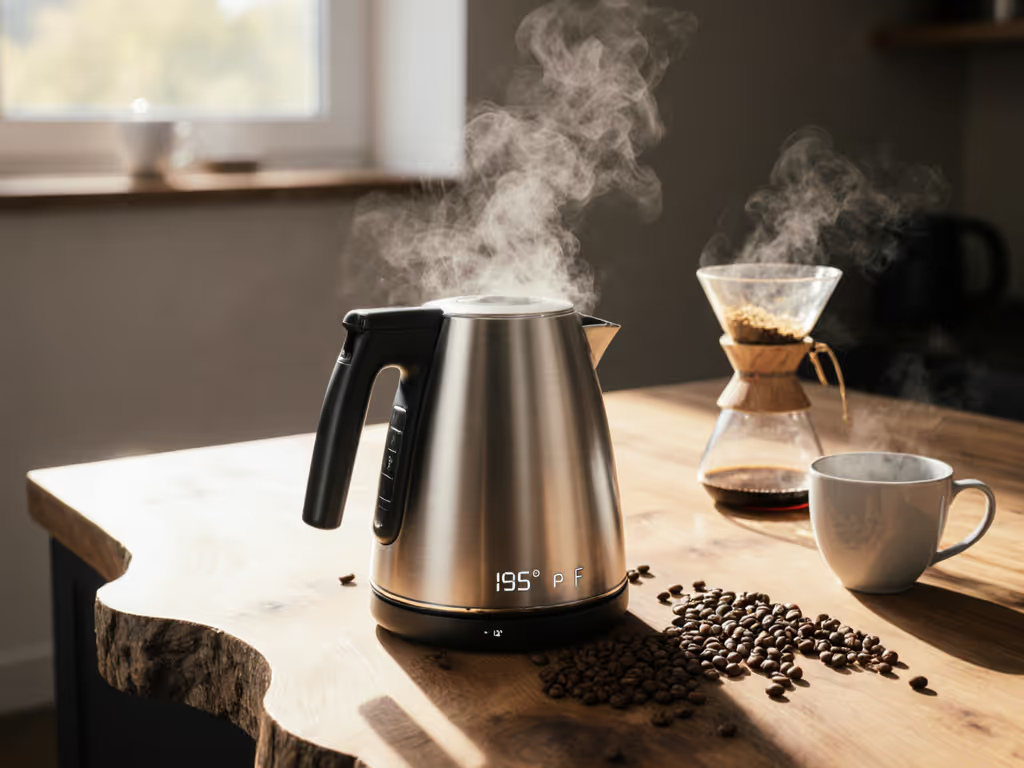
Look for kettles offering at least five-degree intervals, ideally one-degree control[1][2]. A tested Bonavita-style model with 1°F increments (roughly 0.6°C steps) allows you to dial in 75°C with laboratory precision; you set it once, and future brews repeat identically[2].
Accuracy within ±2°C is acceptable for matcha. Beyond that, bitterness creeps in.
What About Keep-Warm and Holding Temperature?
If you prepare matcha multiple times in one sitting (common for tea ceremony practice or a calm morning ritual), the kettle's ability to hold water at your desired temperature for a lengthy period matters enormously[2]. A kettle that cools or reheats inconsistently forces you to re-dial before each pour, breaking your routine.
Optimal models maintain temperature for at least 30 minutes, preferably 60 minutes[2]. During hold-warm cycles, the kettle should reheat only slightly and intermittently, not pulse dramatically. Poor thermal stability creates temperature swings: you get 75°C on the first pour and 68°C by the third. Inconsistency kills repeatability.
Some kettles keep warm for only 20 minutes[1]; that's tight for a second serving. Avoid them for matcha unless you're preparing just one bowl.
Does Capacity Matter for Matcha Preparation?
Matcha ceremony uses only 70-80 ml of water per bowl, barely a tenth of a standard kettle's volume. A 1.5-1.7 liter kettle[1] is overkill if you're whisking one serving, yet it's the industry standard and often cheaper than genuinely compact models.
For solo practitioners, a smaller kettle (under 1 liter) reduces energy waste and heats faster. Learn practical ways to cut electricity per boil in our kettle energy savings guide. However, they're rarer, sometimes cost more, and assume you'll never serve two people or use the kettle for coffee or other teas.
The pragmatic choice: a 1.5-1.7 liter gooseneck kettle with precise temperature control, which doubles as your pour-over or French press kettle. You sacrifice a few minutes of heat-up time but gain flexibility and, usually, better temperature controls than compact models offer[1][2].
What Role Does Pour Spout Design Play?
Matcha whisking doesn't demand a gooseneck spout the way pour-over coffee does. The spout simply needs to deliver steady, dribble-free water without splashing into the bowl. A narrow, angled spout prevents overshooting; a curved lip stops drips that land on your matcha whisk or bench.
Gooseneck kettles excel here: they're designed for precision pouring and typically offer flow control[2]. For a broader look at pour performance across designs, see our tested kettle spout types. However, avoid models with overly thin spouts that clog with mineral deposits, a risk in hard-water areas. A kettle with a removable, cleanable spout or replaceable filter is ideal[1].
How Does Material Choice Affect Matcha Quality?
Brushed stainless steel is the gold standard[2]. It's inert, resists corrosion, and won't leach tastes or odors into your water. Glass kettles offer visibility but add thermal shock risk if you heat them while cold and pour immediately. Plastic-heavy designs introduce a chemical odor that taints delicate matcha[2].
For ceremonial matcha, which emphasizes sensory purity, choose a kettle with minimal plastic exposure to hot water[2]. The water path should be stainless or borosilicate glass; the lid hinge and base can be plastic without affecting flavor.
How Much Power and Heat Speed Matter?
Matcha kettles typically range from 1,100W to 3,000W[1]. Higher wattage heats faster, often under three minutes from cold to 80°C[1][2]. For a morning ritual, speed matters: a slow kettle (1,100W) can feel like a bottleneck on a rushed day.
1,500W is a reasonable baseline; 2,200W+ is comfortable[1][2]. If you brew multiple servings or heat water frequently, prioritize wattage. If you're a weekend-only matcha drinker, speed is less critical.
That said, faster heating also means you'll spend less time waiting, a behavioral win that supports consistency. Secure, stable, repeatable routines depend partly on friction removal. A kettle that heats in two minutes rather than seven removes a reason to skip ceremony.
What Warranty and Build Quality Indicators Should I Check?
Matcha kettles are durable appliances; they're not heating to 100°C constantly, which reduces thermal stress. Still, look for models with two- to five-year warranties[1], removable filters (easier to clean and replace), and clear descaling guidance.
Hard water is a silent killer: mineral buildup fouls the heating element and clogs fine spout openings. Follow our hard-water descaling protocol to maintain accuracy and flow. A kettle marketed for hard-water areas, or one with a cleanable/replaceable filter system, will last longer and maintain accuracy[1].
Check if the manufacturer supports parts replacement (heating element, lid gasket, spout) beyond the warranty. A kettle you can repair outlasts one you discard.
Three Tested Approaches
The Precision Specialist: 1-Degree Control Model
Temperature range: 140-212°F (60-100°C), adjustable in 1-degree increments
Keep-warm hold: Up to 60 minutes
Capacity: 1.7 liters
Power: 1,500W
Material: Brushed stainless steel with gooseneck spout
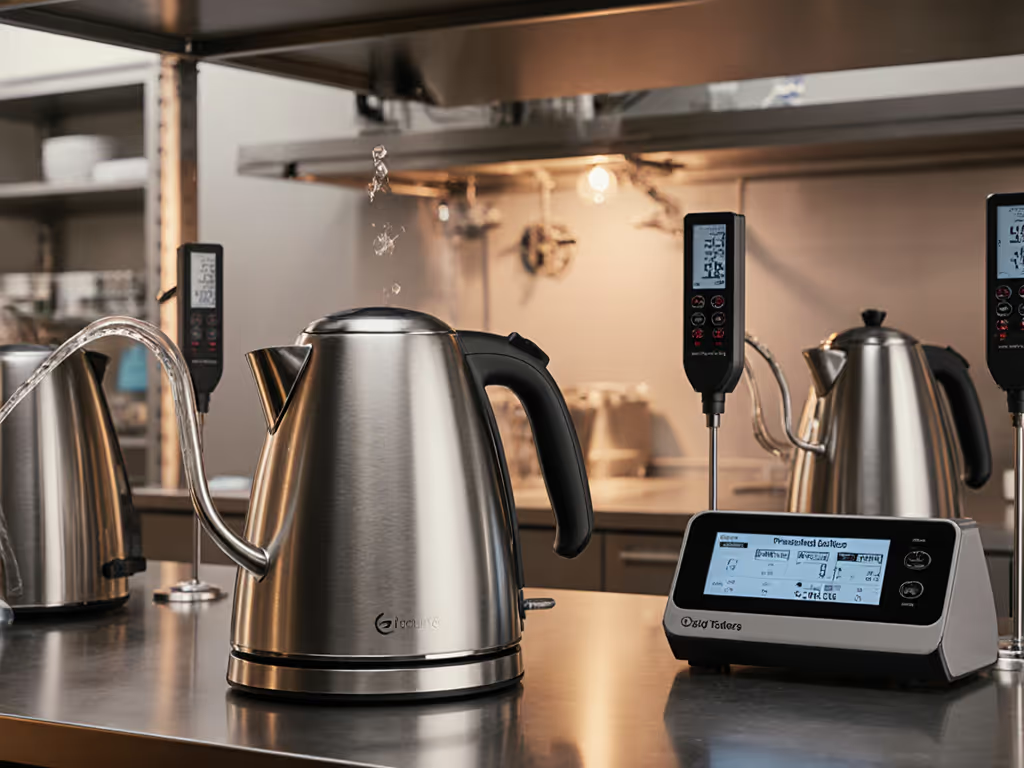
This kettle type (exemplified by Bonavita-style models) is the matcha enthusiast's first choice[2]. The 1-degree granularity lets you set 75°C or 78°C with confidence, and the 60-minute hold means your second bowl brews identically to your first. Accuracy is verified to be exact: whatever temperature you dial appears in the water[2]. See our lab-tested accuracy results for comparative data across multiple kettles.
Trade-off: cost (typically $90-110) and slightly longer heat-up than premium 3,000W models[1][2].
Best for: Ritual-focused drinkers, multiple servings per session, learning phase when consistency builds confidence.
The Balanced Mid-Range: Five-Degree Intervals with Temperature Memory
Temperature range: 40-100°C, adjustable in 5-degree intervals
Pre-set options: Buttons for tea, coffee, and other drinks
Keep-warm hold: 30-40 minutes
Capacity: 1.7 liters
Power: 2,400-3,000W
Material: Stainless steel with removable filter
These kettles (common in brands like Cuisinart and OXO) offer a temperature memory feature: you press your target once, the kettle remembers it, and future sessions begin with one button[1]. Five-degree intervals mean matcha sits squarely between preset buttons. For 75°C, you'd toggle to 75°C manually, but most models accept minor adjustments.
The speed advantage is real: 3,000W models boil in under three minutes, supporting lazy-morning routines[1].
Trade-off: less granular control than 1-degree models, shorter hold times than premium specialist kettles.
Best for: Dual-purpose use (coffee and tea), faster mornings, households with multiple brewing styles.
The Visual-Control Approach: Glass with Temperature Readout
Temperature range: Full range, 40-100°C
Keep-warm hold: Up to 30 minutes
Capacity: 1.5-1.7 liters
Power: 2,000-3,000W
Material: Borosilicate glass with stainless-steel base and lid
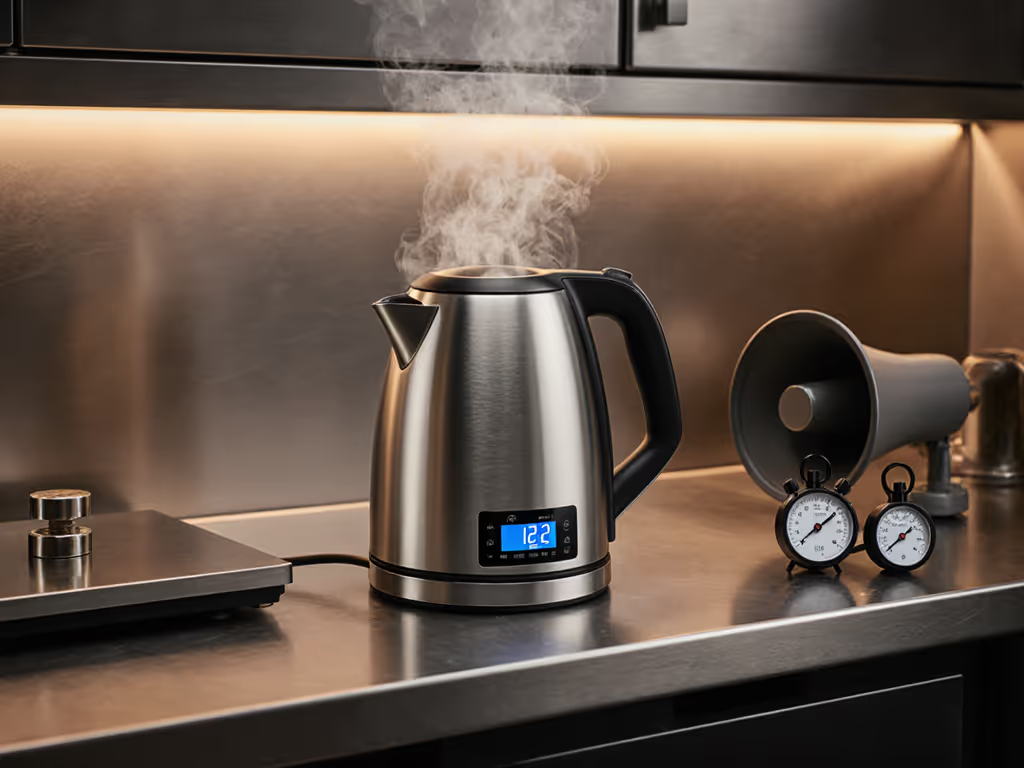
Glass kettles offer thermal shock-resistant design for easy viewing and safety[3]. You watch water heat in real time and can spot impurities or floating particles. An audible signal alerts when the proper temperature is reached, eliminating guesswork[3].
The transparency builds confidence, especially for beginners unfamiliar with water's appearance at various temperatures. You learn that 70°C water doesn't bubble; 80°C shows gentle movement at the base.
Trade-off: glass is heavier, requires care to avoid thermal shock (never pour cold water into a heated glass kettle), and doesn't insulate as well as stainless steel (water cools slightly faster during the hold phase).
Best for: Visual learners, ceremony enthusiasts who enjoy watching the ritual, apartments where quiet matters (glass boils almost silently compared to metal).
Practical Checklist for Matcha Kettle Success
- Temperature range includes 70-80°C with at least 5-degree (ideally 1-degree) granularity
- Holds water at set temperature for at least 30 minutes without significant drift
- Gooseneck or angled spout prevents splashing and drips
- Stainless steel or glass water path; minimal plastic in contact with hot water
- Power rating 1,500W or higher (sub-4-minute heat-up preferred)
- Removable filter and spout for descaling in hard-water areas
- Two-year minimum warranty; manufacturer offers replacement parts
- Capacity 1.5-1.7 liters (flexible for tea, coffee, and multiple servings)
- User manual includes temperature guidance for different tea types
The Consistency Principle
Matcha demands precise, repeatable conditions because the ritual itself depends on sensory predictability. Your palate learns what 75°C tastes like, the slight grassiness and the umami sweetness, and expects it every time. A kettle that drifts from 75°C to 80°C to 72°C (due to poor temperature stability) breaks that learning loop and frustrates you into skipping ceremony.
Conversely, a kettle that hits 75°C reliably, holds it, and lets you pour at will builds a habit. You trust the gear, not your guesswork. That trust becomes the foundation of ritual, and ritual becomes the reason you brew matcha instead of reaching for instant coffee.
The kettles outlined above all support that foundation. Your choice depends on whether you prioritize maximum precision (1-degree control), dual-purpose flexibility (pre-set memory), or sensory engagement (glass transparency). None are wrong; all are secure, stable, repeatable, which is what matcha practice demands.
Further Exploration
If you're new to matcha or temperature-controlled kettles in general, start by reading your kettle's manual thoroughly: manufacturer guidance on preset temperatures and hold-time logic varies widely, and understanding your specific model's behavior is the first step toward consistency. Next, invest in an inexpensive digital thermometer (under $15) and verify your kettle's accuracy once, the exercise teaches you how water cools between kettle and bowl, personalizing your technique to your space.
For those deepening matcha practice, explore ceremonial-grade sourcing, whisking technique, and bowl selection in tandem with kettle choice. Temperature is one variable in a larger ritual; the best kettle amplifies, not replaces, your attention to craft.
Finally, join a tea community (online forums, local shops, or tea ceremonies) where practitioners share real-world experiences with specific models. What works in a dry climate or soft-water region may need tweaking in your hard-water kitchen. Those nuances, learned from others, accelerate your path to mastery far more than specs alone can offer.
Related Articles