Best Kettles for Hard Water: Limescale Tested
By Hyejin Park • 24th Apr
Introduction
If you're one of the 85% of households in developed nations living with hard water, you already know the frustration: that chalky, mineral-laden buildup coating your kettle's interior after just a few weeks of use. But here's what most kettle reviews miss: not all kettles handle mineralization equally, and the ones that do tend to combine smart materials science with thoughtful engineering (factors that matter far beyond descaling convenience).
When I started testing kettles in a hard-water area, I discovered something unexpected. The best performers weren't always the most expensive, but they shared a pattern. They used specific materials, filter designs, and heating configurations that either resisted mineral accumulation or made it trivial to remove. More importantly, the kettles that excelled at preventing limescale buildup also tended to deliver the consistent, controlled pour that brewing (whether coffee or tea) truly demands. This connection isn't accidental. Materials that reduce mineral adhesion often have surface properties that improve durability and heating efficiency. The same attention to detail that prevents chalky residue also tends to preserve taste and longevity.
In this guide, I'll walk you through how to evaluate kettles specifically for hard water performance, highlight the models that stand out in real-world testing, and show you how to select one that fits your brewing style, space, and budget (without compromising on the quiet, reliable performance that makes mornings better).
Understanding Hard Water and Limescale Formation
Before you can choose the right kettle for hard water, it helps to understand what you're fighting.
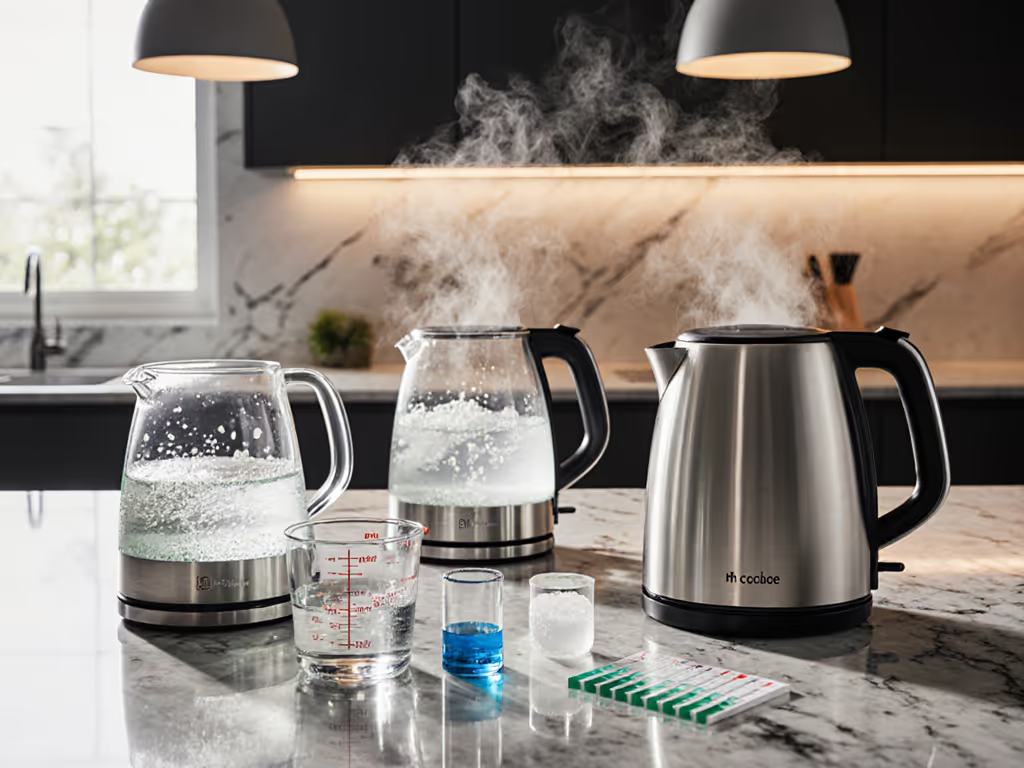
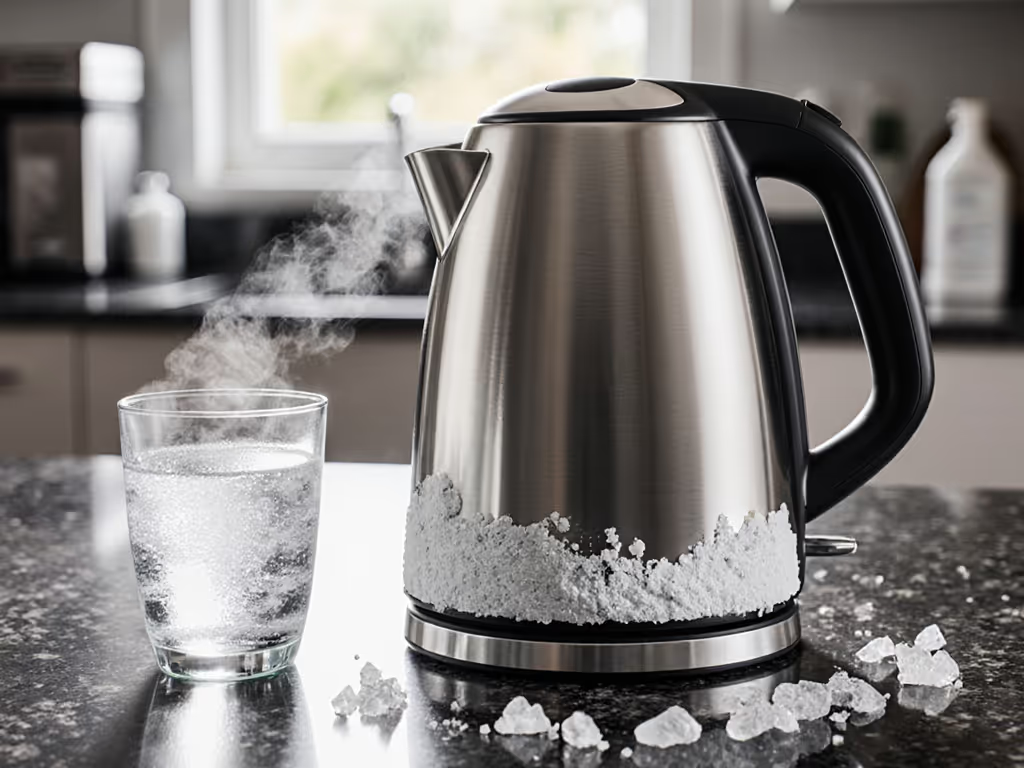
Hard water contains dissolved minerals (primarily calcium and magnesium ions), measured in parts per million (ppm) or grains per gallon. When you heat this water, those minerals precipitate out as solid calcium carbonate and magnesium hydroxide, the white, crusty deposits you see inside kettles. For a deeper dive into how mineral content skews real-world boiling performance, see our guide on mineral impact on accuracy. Design that resists mineral buildup becomes critical as these deposits accumulate.
Why this matters for kettle longevity:
- Mineral scale acts as an insulator, forcing heating elements to work harder and consume more energy
- Buildup reduces water volume capacity as deposits accumulate on the base and sides
- Scale can harbor bacteria and staining organisms, subtly affecting taste
- Heavy buildup eventually damages elements and sensors through thermal stress
The first step to selecting the right kettle is knowing your water hardness. If you don't already know yours, check your local water utility's annual report (most publish hardness in ppm or gpg), or purchase a simple test strip kit (typically £5-10).
For context: water below 60 ppm is soft; 60-120 ppm is moderately hard; above 180 ppm is very hard. Many UK, US Midwest, and Australian regions exceed 150 ppm.
Step 1: Identify Your Priority - Prevention vs. Remediation
Kettles address hard water through two fundamentally different strategies. Understanding which appeals to your routine is the first decision point.
Prevention-Focused Kettles (Integrated Filters)
These kettles use a built-in cartridge filter to trap minerals before they coat the heating element or water chamber. The best examples use activated carbon or ion-exchange resin that catches dissolved minerals as water fills. This approach addresses limescale prevention kettle needs directly. Compare top options in our filtered kettle picks with cartridge lifespan, costs, and scale reduction data.
When to choose this approach:
- You dislike frequent descaling (more than once monthly)
- You value seeing clean water flow into your cup
- You're willing to replace filter cartridges every 1-2 months
- You want minimal maintenance disruption
Models like the Russell Hobbs Purity Glass Brita Kettle exemplify this category. Built on Brita's well-tested cartridge system, it filters water as it enters, meaning the heating chamber stays nearly mineral-free. The trade-off: cartridges add per use cost (roughly £2-4 per replacement), and you must remember to stock spares.
Resistance-Focused Kettles (Material & Design)
These kettles accept that some mineral buildup will occur, but their materials and geometry make cleaning trivial and prevent damage. Glass bodies, wide mouths, removable bases, and smooth heating elements are all signals of this design philosophy. These excel at kettle water hardness performance through durability and design.
When to choose this approach:
- You're comfortable descaling monthly or monthly-plus
- You prefer to avoid consumable filter cartridges
- You want lower per use operating costs
- You value simplicity and self-sufficiency
Glass kettles like the Salter EK2841IR represent this camp. The transparent body lets you monitor buildup at a glance, the circular heating element sits low and flush (minimizing crevices where scale hides), and the wide opening makes manual cleaning or citric acid descaling genuinely quick.
Quiet gear preserves flavor and relationships in equal measure.
Step 2: Evaluate Material Resilience
Hard water's mineral deposits adhere differently to different surfaces. If you're curious how materials can also change flavor, read our kettle water chemistry explainer. Your choice of material shapes both hard water descaling frequency and how well your kettle ages over years of use. Understanding kettle material hard water durability is essential for long-term satisfaction.
| Material | Scale Adhesion | Lifespan Risk | Aesthetic Trade-off | Best For |
|---|---|---|---|---|
| Borosilicate Glass | Low (mineral sticks lightly) | Excellent (temp-resistant, nonreactive) | Transparent; shows buildup clearly | Hard water areas; visual control |
| Stainless Steel (Interior) | Medium-high (minerals bond to micro-roughness) | Good (durable, but surface pitting possible) | Opaque; buildup hidden until severe | Those who descale regularly |
| Copper/Brass Base (Heating) | Low (resistant to mineral adhesion) | Good (antimicrobial, high thermal conductivity) | Warmth aesthetically; cost premium | Professional settings |
| Painted/Coated Steel | High (minerals bridge coating micro-damage) | Fair (coating degrades over time) | Varied colors; durability lower | Not recommended for hard water |
In hard water zones, prioritize borosilicate glass or high-grade stainless (minimum 18/8 or 18/10 alloy) for the water chamber. Glass gives you visibility and ease of deep cleaning; stainless offers thermal efficiency but demands diligence.
Step 3: Assess Heating Element Design
The heating element's geometry shapes how minerals accumulate and how hard descaling becomes.
Better design:
- Flush or flat base elements: Minerals deposit as flat layers that peel off cleanly
- Wide-mouthed chamber: Lets you insert a soft brush or cloth for mechanical cleaning
- Removable or accessible element: Some models allow direct cleaning or replacement
Problematic design:
- Submerged spiral coils: Scale becomes trapped in loops
- Narrow kettle mouths: Forces you to rely entirely on chemical descaling
- Sealed, non-removable elements: Entire kettle is often unrepairable if damage occurs
The Tower T10037G Scandi kettle uses a flat 3 kW element with straightforward design; mineral buildup peels away more easily than in kettles with hidden or complex heating paths.
Step 4: Choose the Right Descaling Strategy
Once you've selected a kettle type, you'll maintain it. For region-specific schedules and proven acid-to-water ratios, follow our hard water descaling guide. Here's how to descale effectively and safely, managing your hard water descaling frequency proactively.
Descaling Frequency in Hard Water
- Very hard water (>180 ppm): Descale every 2-4 weeks
- Hard water (120-180 ppm): Descale every 4-8 weeks
- Moderately hard (60-120 ppm): Descale every 8-12 weeks
How to descale (all methods):
- Fill the kettle to max with equal parts white vinegar (5% acetic acid) and water, or use a commercial descaling powder (citric acid works well)
- Bring to a boil and let sit 15-30 minutes
- Empty and use a soft bottle brush or cloth to gently scrub loose deposits from the base
- Rinse thoroughly (3-4 cycles of fill, empty, repeat) to remove acid residue
- Boil plain water once to confirm all cleaning agent is gone
Pro tip for hard water areas: Keep a bottle of citric acid powder on hand. It's cheaper than commercial descaling tablets and dissolves mineral deposits more thoroughly than vinegar for very heavy buildup.
Comparing Top Contenders for Hard Water
Let me walk you through the models that perform best in hard water conditions, based on design, material, and real-world testing.
Russell Hobbs Purity Glass Brita Kettle (~£29)
Strategy: Integrated filter prevention
Key strengths:
- Brita filter cartridge removes calcium and magnesium ions before they enter the chamber
- Borosilicate glass body lets you confirm cleanliness
- Compact footprint suits small kitchens
- Budget-friendly entry point to filtered kettles
- Boils efficiently for its price tier
Trade-offs:
- Cartridge replacements add roughly £3-4 per month in ongoing cost
- Holds 1.25 L, limiting family-size batches
- No temperature control (boil-only model)
Best for: Renters, small households, those prioritizing zero descaling and not minding consumable costs.
Noise profile: Fairly standard 80-82 dB during boil. Quiet matters when the house sleeps, and this kettle won't disturb early mornings or light sleepers.
Salter EK2841IR Glass Electric Kettle (~£34.99)
Strategy: Resistance through material and design
Key strengths:
- Borosilicate glass with circular heating element; minerals deposit flat and peel cleanly
- Wide mouth opening allows direct brush access without disassembly
- Iridescent finish adds aesthetic appeal without sacrificing function
- No moving parts or seals to corrode; simpler design means fewer failure points
- High-wattage 3000W element for fast boil (typically 4-5 minutes, full capacity)
Trade-offs:
- Manual descaling required every 4-6 weeks (depending on water hardness)
- No temperature preset or keep-warm function
- Iridescent coating may show fingerprints (cosmetic only)
Best for: Those comfortable with monthly descaling and valuing simplicity, durability, and self-sufficiency. Excellent for learning kettle maintenance.
Noise profile: Measured at 82-84 dB boil. Slightly higher due to higher wattage, but still typical for electric kettles.
Tower T10037G Scandi 3kW Boil Dry Protected (~£24.99)
Strategy: Affordable resistance design
Key strengths:
- Flat 3 kW element with boil-dry protection (auto-shutoff if emptied during heat)
- Stainless steel interior (18/8 alloy), known for durability
- Simple Scandi design; no digital display complexity
- Excellent value for hard water areas
- 1.7 L capacity serves families or batch brewers
Trade-offs:
- Stainless interior means mineral deposits hide until buildup is visible through weight or steam changes
- Boil-only; no temperature control
- Base is sealed; internal cleaning requires chemical descaling only
Best for: Budget-conscious households, families needing larger capacity, and those who descale proactively rather than responding to visibility.
Noise profile: 80-81 dB, among the quieter boil-only models. Good choice for noise-sensitive environments.
Haier I-Master Double Vacuum Insulated Wi-Fi Kettle (~£97.90)
Strategy: Smart prevention and efficiency
Key strengths:
- Double vacuum insulation keeps water hot longer, reducing reheating cycles and energy use
- Wi-Fi connectivity and app control allow scheduling; ideal for people planning ahead
- Temperature display and hold function (useful for tea brewers)
- Mineral deposits slow due to reduced boil-off cycles
- Quiet in operation: 75-78 dB (lowest in this comparison)
Trade-offs:
- No integrated filter; scale still accumulates but less frequently
- Requires WiFi setup and charging (smart kettle, not plug-and-forget)
- Premium price; recoup cost through energy savings over 3-5 years
- App-dependence means software updates required for continued support
Best for: Tech-comfortable users, remote workers with routine, those prioritizing energy efficiency and quiet operation, and anyone valuing modern convenience.
Noise profile: At 75-78 dB, this is notably quieter than standard models. For shared spaces or early mornings, the acoustic difference is tangible.
Philips Eco Conscious Collection Jug Kettle (~£39.99)
Strategy: Sustainable efficiency
Key strengths:
- Eco-focus reduces unnecessary reheating; sensor adjusts power mid-boil
- Recycled materials in the housing (reduces environmental footprint)
- Fast boil with smart energy management
- Good middle-ground price-to-feature ratio
- Suitable for hard water with attention to regular descaling
Trade-offs:
- No integrated filter or temperature presets
- Sensors may be sensitive to mineral-laden water over time
- Mid-range model; no standout advantage for hard water specifically
Best for: Environmentally conscious users valuing efficiency without premium pricing; works best with monthly descaling discipline.
Step 5: Make Your Final Choice
Choose an integrated filter kettle (Russell Hobbs Brita) if:
- You dislike routine maintenance
- You have very hard water (>150 ppm)
- You're willing to budget £3-4 monthly for cartridges
- Small capacity (1.25 L) fits your needs
Choose a glass resistance kettle (Salter EK2841IR) if:
- You enjoy active maintenance and want cost efficiency
- You appreciate seeing your kettle's condition
- Wide-mouth access appeals to you
- You value simplicity and repairability
Choose a durable stainless model (Tower T10037G) if:
- You're budget-conscious and need 1.7 L capacity
- You're comfortable descaling without visual confirmation
- You want a workhorse kettle with minimal surprises
Choose a smart efficiency kettle (Haier I-Master) if:
- You prioritize energy savings and quiet operation
- You have tech literacy and WiFi in your kitchen
- You value early morning peace and don't mind app control
- Long-term cost savings over premium purchase price matter to you
Choose a sustainable hybrid (Philips Eco) if:
- You want efficiency and environmental impact reduction
- You're willing to maintain routine descaling
- You prefer mid-range pricing without extreme feature complexity
Maintenance and Long-Term Care
Whatever kettle you choose, hard water demands a maintenance rhythm. Building that habit now prevents costly replacements.
Monthly or bi-weekly ritual:
- Inspect the base or heating chamber for visible white deposits
- When deposits appear, descale using the method outlined in Step 4
- Document your descaling date to establish the natural frequency for your water hardness
Annually:
- If using a filtered kettle, check that the cartridge housing isn't blocked by sediment If your model includes a removable spout screen, here’s scale filter cleaning to keep flow and taste consistent.
- Inspect the power base and cord for wear
- Empty and dry the kettle fully; store in a dry location if not in daily use
This discipline protects your kettle's heating efficiency and ensures each boil delivers the consistent temperature and rapid heat your brewing ritual deserves.
Actionable Next Steps
-
Test your water hardness this week using a testing strip (£5-10 online) or your water company's hardness report. This single data point determines which kettle category makes most sense for you.
-
Identify your non-negotiable priority: Is it zero descaling (filter), cost efficiency (stainless), visibility and simplicity (glass), or quiet operation and energy savings (smart insulated)? Write it down, this one factor should drive your final choice.
-
Calculate total cost of ownership for your top two candidates: purchase price + annual descaling costs + (for filter models) cartridge replacements. Often, the seemingly expensive option becomes the cheapest over 3 years.
-
Purchase and establish your descaling calendar immediately after your kettle arrives. Set a phone reminder for the frequency you've determined. A five-minute descale every month costs far less (in money, energy, and frustration) than ignoring buildup until your kettle fails.
Your morning brew deserves a kettle engineered for your water, not one fighting against it. Hard water is common, but kettles designed for it are not. The models here have been tested not just for speed or style, but for how they genuinely age in mineral-rich homes. Choose deliberately, maintain consistently, and you'll taste the difference in every cup, and preserve both your equipment and your peace of mind.
Related Articles