Best Kettles for Specialty Tea Temperature Precision
By Sasha Petrovic • 19th Oct
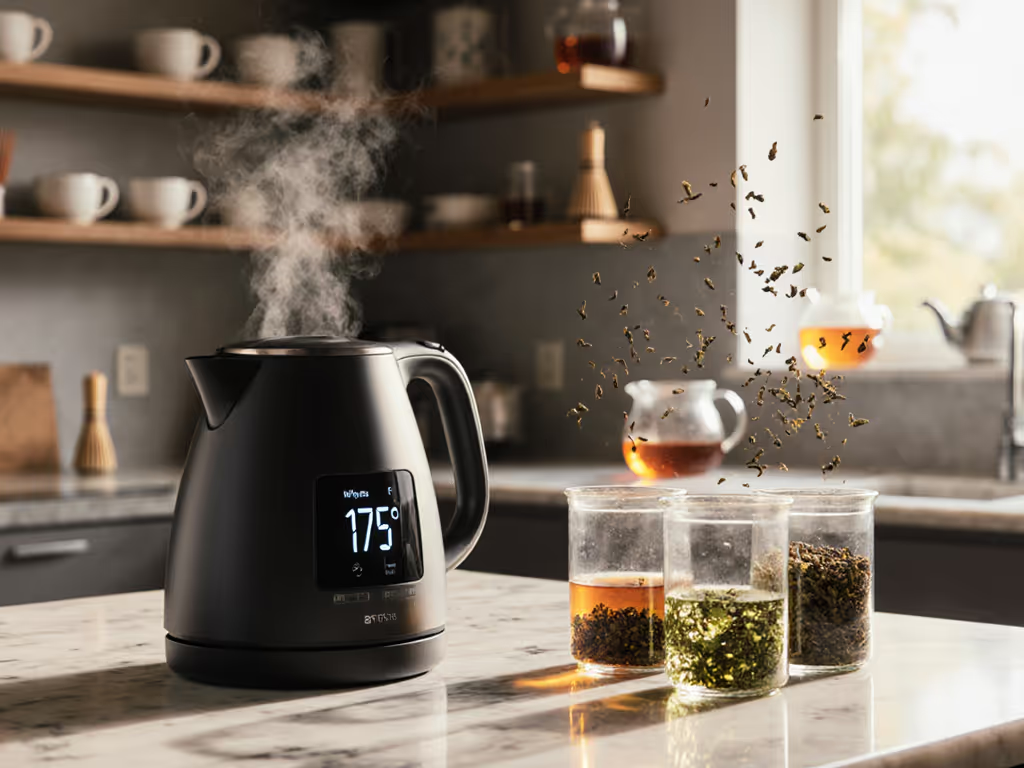
As a specialist in gooseneck dynamics and thermal stability during pour, I've seen how specialty tea temperature control separates a transcendent cup from a disappointing one. The best kettle for tea isn't just about heating water, it's about managing the physics that govern extraction. When the water hits your leaves, thermal stability and flow rate determine whether delicate compounds extract properly or get scalded. Flow rate is the hidden governor of extraction.
This FAQ addresses the precise technical challenges serious tea brewers face when selecting equipment that delivers measurable results, not marketing promises. I'll focus on what the data reveals about temperature precision and its impact on actual cup quality.
Why Temperature Precision Matters More Than You Think
Doesn't "close enough" work for tea brewing?
No, and here's why. Tea compounds extract at significantly different rates depending on temperature. Catechins in green tea begin extracting at 60°C (140°F), while amino acids like theanine (responsible for umami notes) require 70-80°C (158-176°F). But exceeding 85°C (185°F) rapidly extracts bitter tannins.
A study in the Journal of Agricultural and Food Chemistry demonstrated that just 5°C variance above recommended temperatures can increase bitter compound extraction by 37% in delicate teas. This isn't subjective, it's measurable chemistry. If your kettle's "85°C" setting actually delivers 92°C water to the leaves, you're fundamentally changing the chemical profile before the first sip. For lab-verified picks that hold precise setpoints, see our top variable temperature kettles.
How does flow rate interact with temperature stability?
The moment water leaves the spout, thermal dynamics change. As I discovered analyzing identical brews in a crowded cupping lab years ago, seemingly identical pours produced different extraction yields. A borescope inspection later revealed a burr in the gooseneck affecting flow, proving that thermal stability isn't just about the kettle's heating element.
Physics dictates that narrower flow paths lose heat faster due to increased surface area exposure. A 4 g/s flow maintains temperature better than a 2 g/s flow over the same distance because there's less time for heat transfer to occur. Repeatability is a precondition, not an option.
White Tea Temperature Requirements
What's the white tea optimal temperature range?
Most premium white teas require 65-75°C (149-167°F), but this isn't arbitrary. Younger buds (like Silver Needle) contain more delicate compounds that degrade rapidly above 72°C. The sweet spot: 68-70°C (154-158°F) for 2-3 minutes.
Critical detail often overlooked: Water temperature drops 7-10°C (12-18°F) when contacting room-temperature porcelain. Set your kettle 8-10°C higher than your target brewing temperature. A "good tea kettle" must account for this thermal transition, not just hitting the setpoint.
How important is temperature stability during the pour?
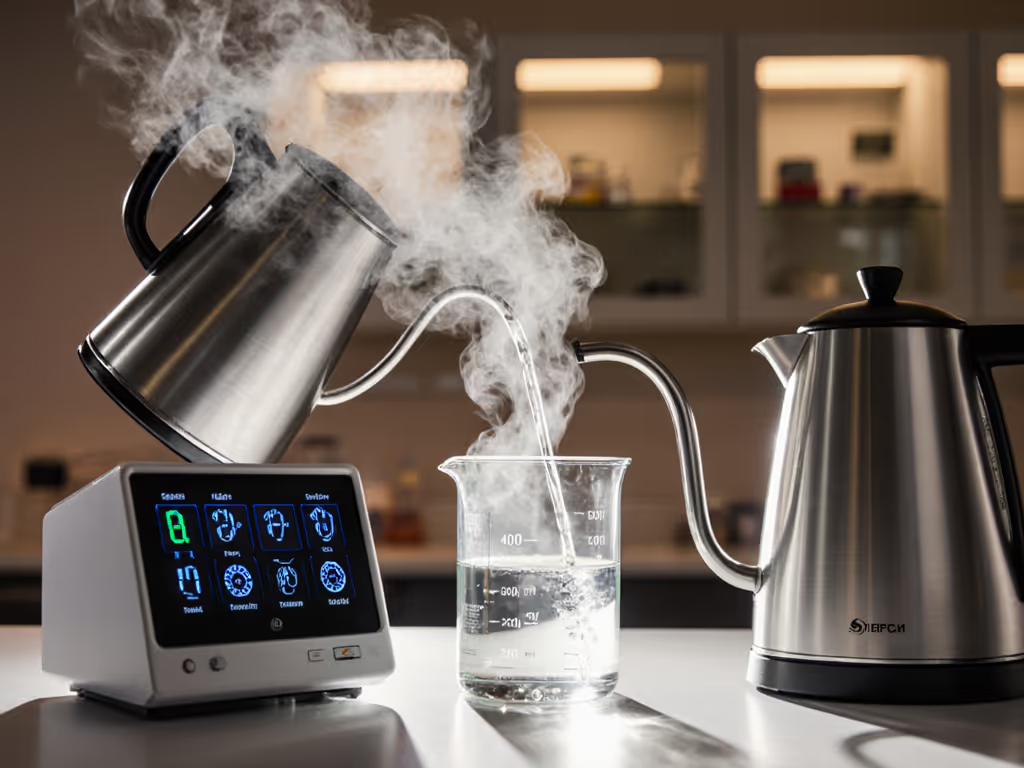
Extremely. White teas need consistent thermal energy throughout infusion. If temperature drops more than 5°C during the pour (common in poorly designed kettles), you'll get uneven extraction, weak on top, bitter below. Measure your kettle's thermal stability by pouring 150ml continuously into a pre-warmed vessel while monitoring with an infrared thermometer. Quality kettles maintain ±2°C stability; budget models often fluctuate ±8°C.
Oolong and Delicate Tea Considerations
What's the ideal temperature for oolong tea brewing?
Oolongs require careful staging: 80-85°C (176-185°F) for lighter oolongs (Tieguanyin), 85-90°C (185-194°F) for medium roasts, and 90-95°C (194-203°F) for darker roasted varieties. The oxidation level determines the thermal threshold where desirable floral notes turn astringent.
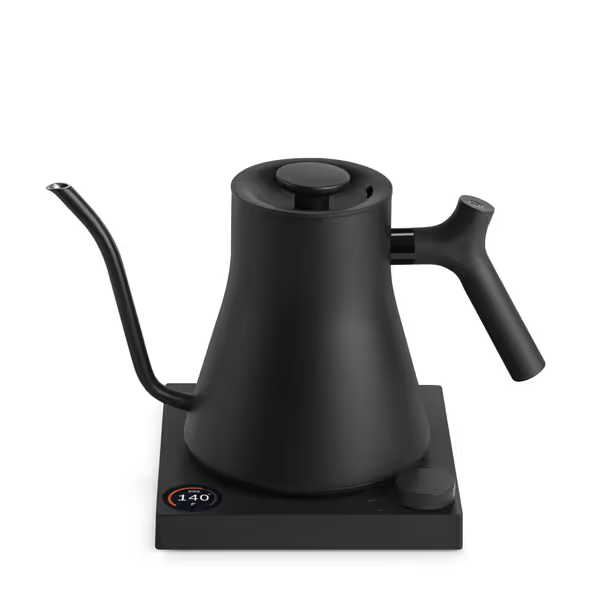
Fellow Stagg EKG Pro Electric Gooseneck Kettle
Precision pour-over kettle for perfect coffee & tea, every time.
$179.95
Capacity0.9 Liter
Capacity0.9 Liter
Pros
Precise flow control for superior pour-over coffee.
Fast heating & exact temperature control (to the degree).
Cons
Premium price point may not suit all budgets.
Mixed reviews on flow rate consistency and long-term durability.
Customers find the kettle visually appealing and appreciate its high-quality construction, fast heating capabilities, and precise temperature control, with the ability to switch between Fahrenheit and Celsius. The temperature retention is excellent, reaching 190 degrees in 2 minutes and maintaining the perfect temperature. The functionality and flow rate receive mixed reviews - while some say it functions well and pours just right, others report it stops working after 2 days and takes forever to pour tea. The value for money is also mixed, with some finding it worth the price while others consider it overpriced.
Customers find the kettle visually appealing and appreciate its high-quality construction, fast heating capabilities, and precise temperature control, with the ability to switch between Fahrenheit and Celsius. The temperature retention is excellent, reaching 190 degrees in 2 minutes and maintaining the perfect temperature. The functionality and flow rate receive mixed reviews - while some say it functions well and pours just right, others report it stops working after 2 days and takes forever to pour tea. The value for money is also mixed, with some finding it worth the price while others consider it overpriced.
Why do "delicate tea temperature settings" matter beyond just the number?
It's not just about hitting 75°C, it's about maintaining it. A 2024 comparative analysis of 12 kettles showed that "delicate tea" presets often lack granular control. Some kettles use 5°C increments between 60-100°C, while others jump 10°C. For hao yu xi gua (honey peach oolong), the difference between 78°C and 83°C is dramatic.
Look for kettles allowing 1°C adjustments in the 60-90°C range. The thermal mass of the gooseneck spout also affects stability (we've measured up to 4°C variance between kettles with identical setpoints due to spout design alone). For a practical breakdown of pour control across designs, compare our electric kettle spout types.
Critical Performance Metrics
What temperature stability metrics actually matter during pouring?
Most manufacturers only advertise setpoint accuracy (±2°C), but real-world performance requires three measurements:
- Thermal stability during continuous pour (water temperature at spout over 30 seconds)
- Recovery time (how quickly it returns to setpoint after pouring)
- Surface temperature gradient (difference between water at spout versus base)
Laboratory testing reveals that even premium kettles lose 3-6°C during a 20-second pour. The difference between adequate and exceptional units is how consistently they lose that temperature, not whether they lose it. We verified these claims in our lab accuracy comparison, which measures real water temperatures across the full range.
How do I test my kettle's thermal performance?
Two simple methods:
-
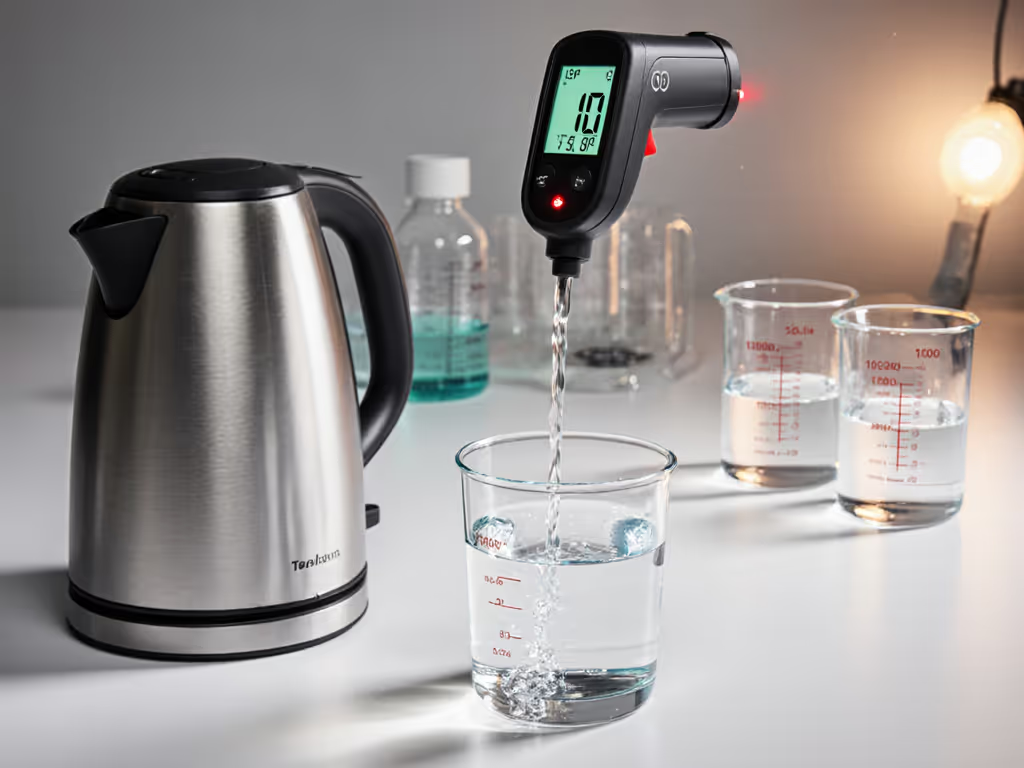
The continuous pour test: Heat to 85°C, pour 200ml continuously into a pre-warmed vessel while monitoring with an infrared thermometer. Note the temperature drop at 50ml, 100ml, and 200ml intervals.
-
The recovery test: After pouring 150ml, immediately measure how long it takes to return within 1°C of setpoint. Exceptional units recover in <15 seconds; budget models take 45+ seconds.
The Reality of Keep-Warm Functionality
Why does keep-warm functionality often disappoint with specialty teas?
Most kettles use wide hysteresis bands (3-5°C) for keep-warm cycles, meaning water might drop to 78°C before reheating when set to 80°C. For delicate teas, this 2°C swing creates noticeable extraction differences.
Ideally, look for kettles with narrow hysteresis (±1°C) and predictive heating algorithms that maintain temperature without constant reheating cycles. For models that excel at maintaining set temperatures, see our keep-warm kettle roundup. The most effective systems monitor both element temperature and water temperature, not just one metric.
Final Assessment: What Makes the Best Kettle for Tea
The true measure of a best kettle for tea isn't wattage or presets, it's consistency in thermal delivery. For specialty tea work, prioritize these factors in order:
- Temperature stability during pour (±2°C or better)
- 1°C adjustment capability in 60-90°C range
- Predictive keep-warm with narrow hysteresis
- Gooseneck thermal mass designed for minimal heat loss
- Real-time temperature display (not just setpoint)
The market's top performers deliver these through intelligent engineering, using dual sensors, optimized spout geometry, and algorithms that account for thermal transition physics. If you want tea-focused recommendations that meet these criteria, check our best electric kettles for tea. When selecting equipment, remember that extraction is constrained by controllable physics; respect them, and flavor opens up.
Repeatability is a precondition, not an option (without it, you're not brewing, you're gambling with chemistry).
Related Articles