Kettle Descaling Indicator Comparison: What Works
By Mina Kassem • 2nd May
Understanding Kettle Descaling Indicators and Auto-Scale Detection Systems
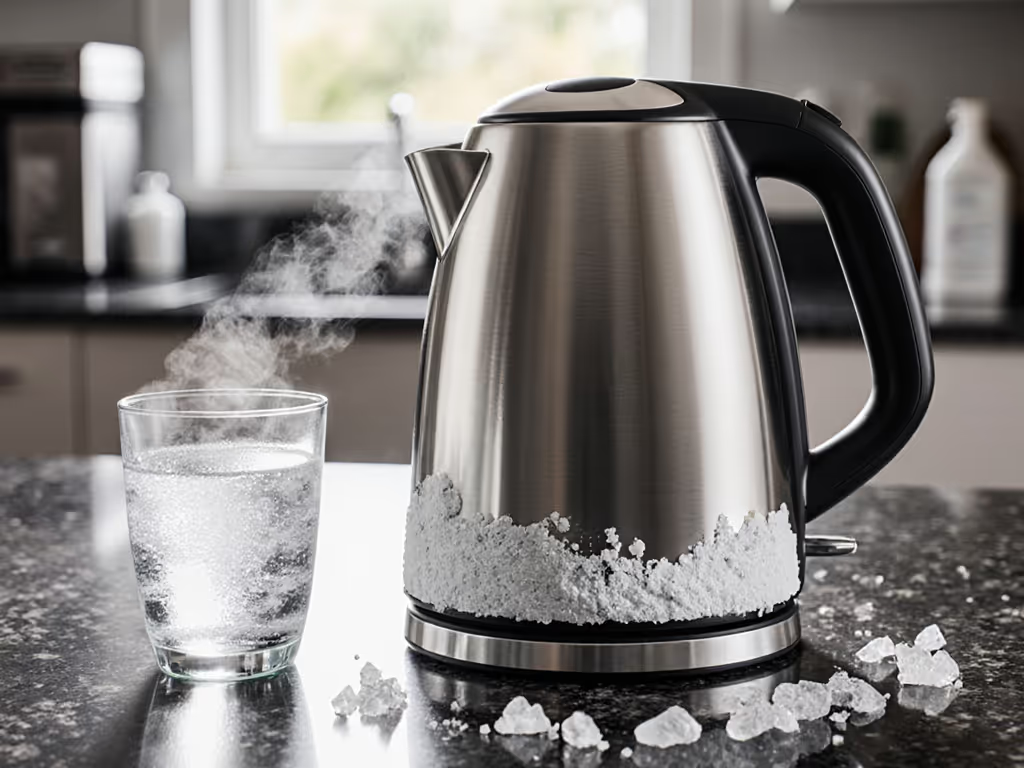
Limescale accumulation is not cosmetic. It is thermal damage in motion. Mineral buildup reduces heating efficiency, degrades temperature accuracy, and eventually kills the element. For the science behind this, see water mineral effects on accuracy. The question isn't whether you'll descale, it is whether your kettle will tell you when.
Most kettles don't. They sit there, silently calcifying, until one morning the boil takes 40 seconds longer than baseline. By then, you've already lost thermal accuracy and wasted energy. To cut operating costs, use our kettle energy-saving guide. Control the variable, then judge the outcome. That requires knowing when descaling is due, not when failure arrives.
Why Descaling Indicators Matter
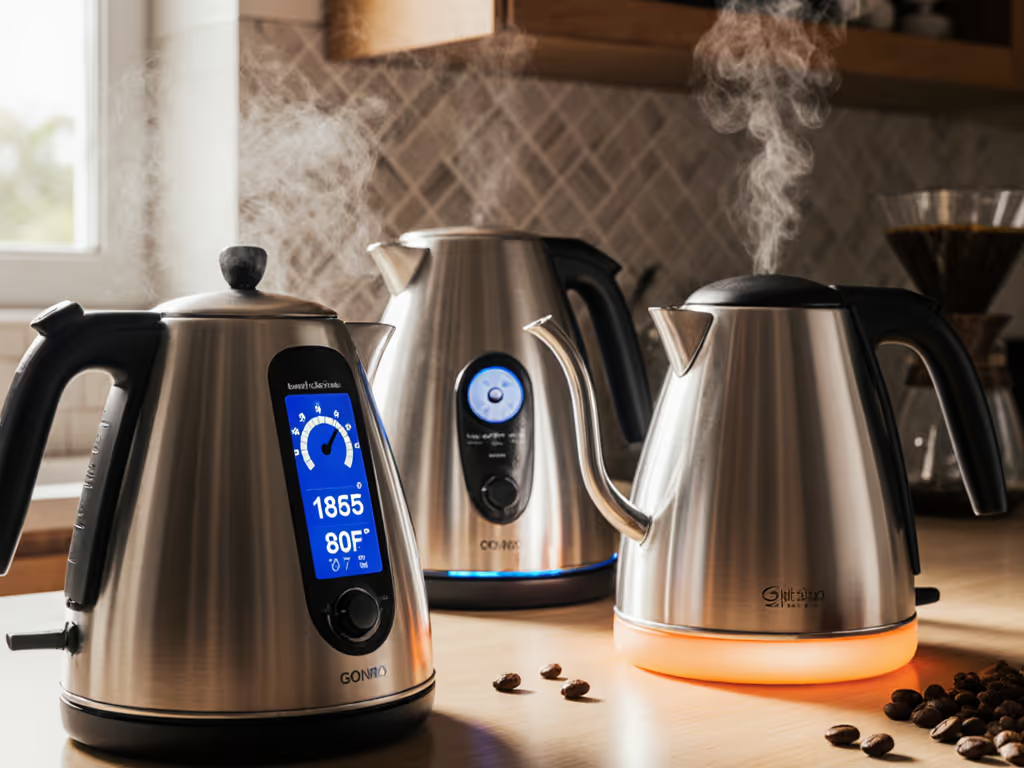
Descaling indicators represent the intersection of kettle maintenance alerts and preventive care. Without one, you operate in reaction mode: you wait for performance to drift, then descale blind. With one, you descale on schedule, before thermal accuracy suffers.
Most kettles omit indicators entirely. Cost is the barrier. A real descaling indicator requires either conductivity sensors (which measure dissolved minerals), thermal logging that detects efficiency loss, or cycle counting with validated descaling intervals. Each adds $5 to $15 to manufacturing cost. Budget models skip it. Some premium models include one, then hide it in a menu you'll never open.
If descaling intervals aren't mentioned in the manual or spec sheet, the kettle defaults to "whenever the user remembers." That's not a system. That's hope.
FAQ: Descaling Indicators and Scale Detection Accuracy
What Exactly Is a Descaling Indicator?
A descaling indicator is any mechanism that signals mineral accumulation. It can take several forms:
- Visual: A dedicated light or display gauge showing mineral buildup level
- Algorithmic: The kettle logs boil cycles and estimates scale based on usage patterns
- Thermal: Sensors detect efficiency loss (slower heat-up, temperature lag)
- Manual tracking: You log boil cycles yourself or rely on a calendar reminder
Measurement is the foundation of all of these. Without quantifiable data, you're descaling blind or waiting for obvious failure. This principle (the difference between guessing and knowing) shapes everything that follows.
Why Manual Descaling Remains the Industry Standard
Because manual descaling works, and it's cheap. A 50/50 mixture of white vinegar and water is the most effective approach. The typical proportion is 12 ounces of each for a standard kettle, though you scale that up or down based on kettle size. One boil is usually sufficient; subsequent plain-water boils clear any lingering vinegar smell. Get step-by-step care in our electric kettle cleaning guide.
White vinegar outperforms alternatives. Apple cider and other vinegars require extra boil cycles for comparable results. Citric acid is an option, but vinegar remains the standard for availability and cost-effectiveness. Lemon juice works inconsistently because juice strength varies, and pulp residue is a risk.
The downside: manual descaling is reactive. You wait for signs (slower boil, temperature lag, visible scale inside the spout), then you act. This works, but it means your kettle is already underperforming when you descale.
Indicator-Guided Descaling: The Preventive Model
An effective indicator lets you descale before performance drops measurably. If the kettle signals "descale now" after, say, 180 boil cycles (a reasonable interval for moderate hard water), you descale on schedule. Boil times stay baseline. Thermal accuracy stays tight. Element lifespan extends.
The trade-off is modest: you pay slightly more upfront, gain predictability, and eliminate the guessing game.
What Should You Actually Look for in a Descaling Indicator?
Accuracy of trigger timing: Does it signal before performance noticeably degrades, or after?
Test this by logging boil times or element temperatures over weeks. If boil time climbs 5 to 10% before the alert fires, the indicator is working predictively. If the alert comes after you've noticed lag, it's a reactive system, not preventive.
Clarity of signal: Is the alert unmistakable, or buried in menus?
A dedicated light beats a buried menu flag. If you must scroll three screens to find "Descale Status," you will ignore it. The indicator only works if you actually see it.
Interval appropriateness for your water: Does the cycle count or threshold adjust based on local hardness, or does it assume average conditions?
Hard water (>300 ppm mineral content) may require descaling every 60 to 90 cycles. Soft water might go 200+ cycles. A static interval misses this reality. Does the kettle let you input your water hardness? Can it adjust based on region? If not, it's a compromise.
Precision of recovery: After you descale using the kettle's recommended method, does performance return to baseline?
Boil time should recover fully. Element temperature should stabilize. If recovery is incomplete, the descaling method is weak, or the kettle has other problems. A good indicator pairs with a proven method.
Manual vs. Automatic Scale Detection: Separating Marketing from Reality
True automatic scale detection (real-time conductivity measurement) exists but remains rare and expensive. Most systems branded "auto-scale detection" are actually:
- Fixed-interval reminders: "You've boiled 150 times; time to descale." (Effective but not adaptive)
- Cycle counters with locked thresholds: Same limitation.
- Blended approaches: Cycle count + optional manual override (more flexible)
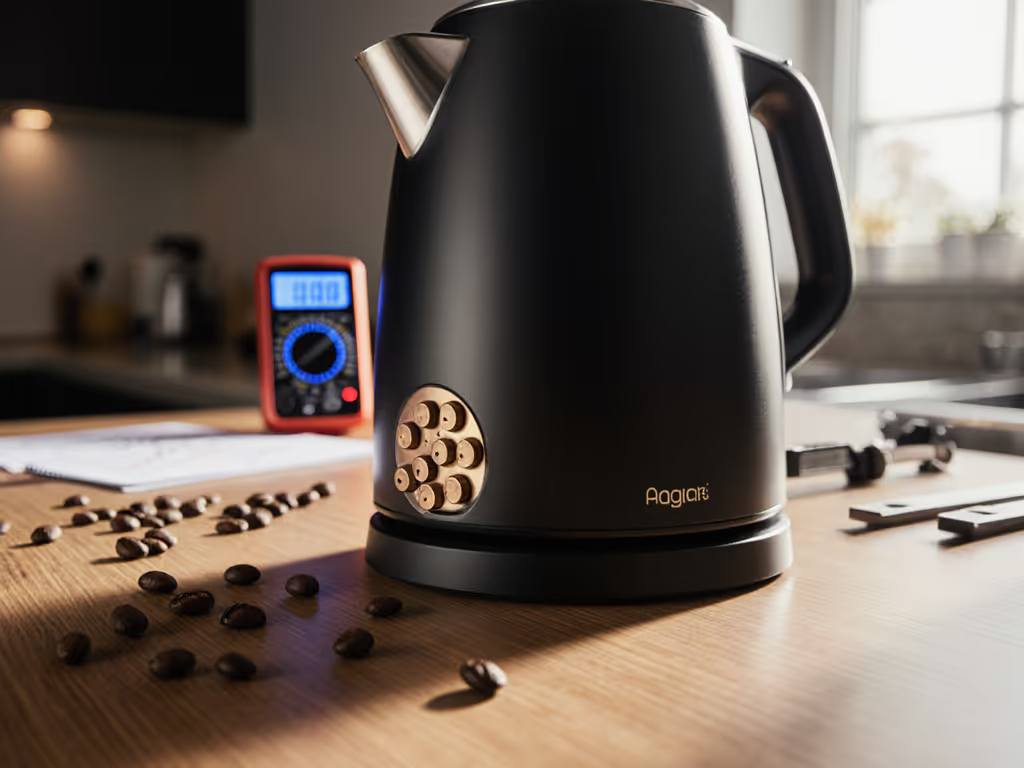
Conductivity-based detection (measuring actual dissolved mineral levels in real time) requires specialized sensors and circuitry. You'll find it in some models above $150, but it's not mainstream in the $40 to $100 range where most buyers shop.
If a kettle claims "smart mineral detection," ask three questions:
- Does it measure conductivity, or just count cycles?
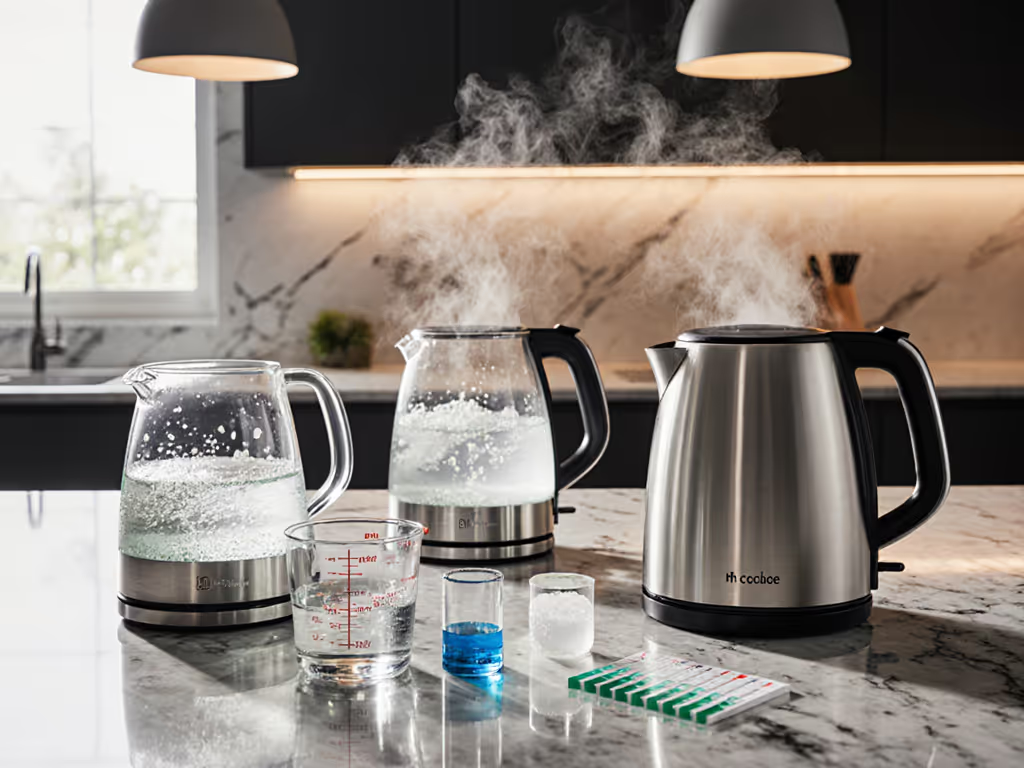
- Can you verify sensor accuracy against a hardness test strip?
- What's the documented recovery performance after descaling... does thermal efficiency actually return?
If answers are vague, it's marketing. If it's not measured, it's just marketing in italics. Apply the same scrutiny here.
How Often Should You Descale? A Data-Driven Answer
The answer depends entirely on your water hardness. A lab measurement (hardness test strips cost $3 to $5) gives you precision: If you live with high mineral content, follow our hard water descaling guide.
- Soft water (<60 ppm): Every 5 to 6 months or ~200 boil cycles
- Moderate hardness (60–120 ppm): Every 3 to 4 months or ~150 cycles
- Hard water (>120 ppm): Every 1 to 2 months or 60 to 90 cycles
A well-designed indicator auto-adjusts based on region or lets you input your local water hardness. Most don't. If your kettle uses a fixed interval, offset it manually. Test your water, calculate your boil frequency, and descale accordingly. Vinegar works reliably every time.
What If Your Kettle Has No Indicator?
Use a separate hardness test. Log your boil time monthly. When it creeps up 10 to 15%, descale. The method is unchanged: 50/50 vinegar and water, one boil, then plain water rinses. Do not overthink it. This approach costs nothing and works consistently.
Descaling Indicators and Sensor Reliability
All sensors drift. Conductivity probes calcify. Thermocouples age. This is why verification matters. A kettle might have a sensor but lose accuracy after 18 months. The only way to know is to cross-check: Does the kettle's estimate match a hardness test strip? Do boil times stay predictable, or does the kettle suddenly claim "descale now" without actual performance change?
Good indicator design includes sensor diagnostics. Understand the tech in how kettle temperature sensors work. Poor design ignores degradation and gives increasingly unreliable alerts over time.
Key Comparison: What Works vs. What Doesn't
What works:
- Cycle counters with adjustable intervals (better than static reminders)
- Boil-time monitoring and logging (requires discipline, but yields real data)
- Conductivity sensors with published accuracy specs (the gold standard, rare below $150)
- Manual hardness testing + simple tracking (free, effective, zero tech required)
- Descaling methods using 50/50 white vinegar and water
What doesn't:
- Vague "smart detection" claims without published sensor specs or validation
- Fixed 12-month or 6-month intervals that ignore water hardness and usage patterns
- Descaling alerts buried in menus or tied to cryptic status lights
- Generic recommendations ("descale every 3 months") that don't account for your region
Final Verdict: Choose Based on Context
Descaling indicators exist. They're rarely essential, but they shift you from reactive to preventive maintenance, and that shift protects thermal accuracy and element lifespan.
Choose an indicator-equipped kettle if:
- You live in hard water and use your kettle daily
- You demand consistent thermal accuracy
- You want to extend element lifespan predictably
Manual logging or fixed-interval descaling is enough if:
- You're in soft water or boil fewer than 5 times weekly
- You're willing to track boil time yourself
- You accept slight thermal drift over time
Control the variable, then judge the outcome.
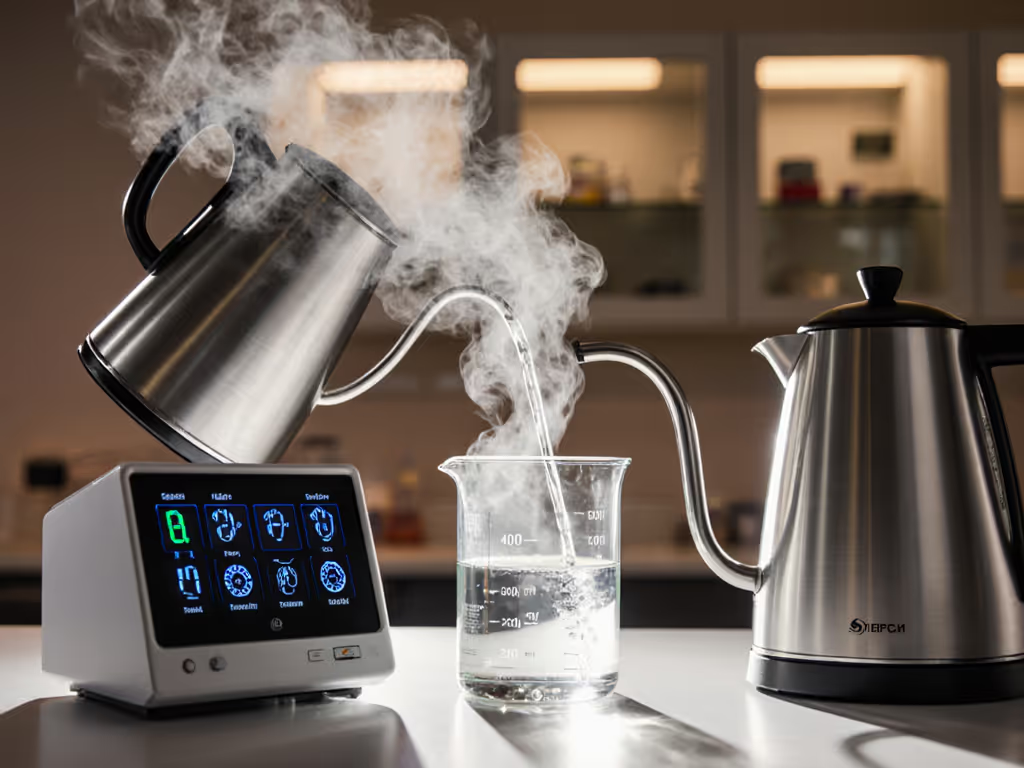
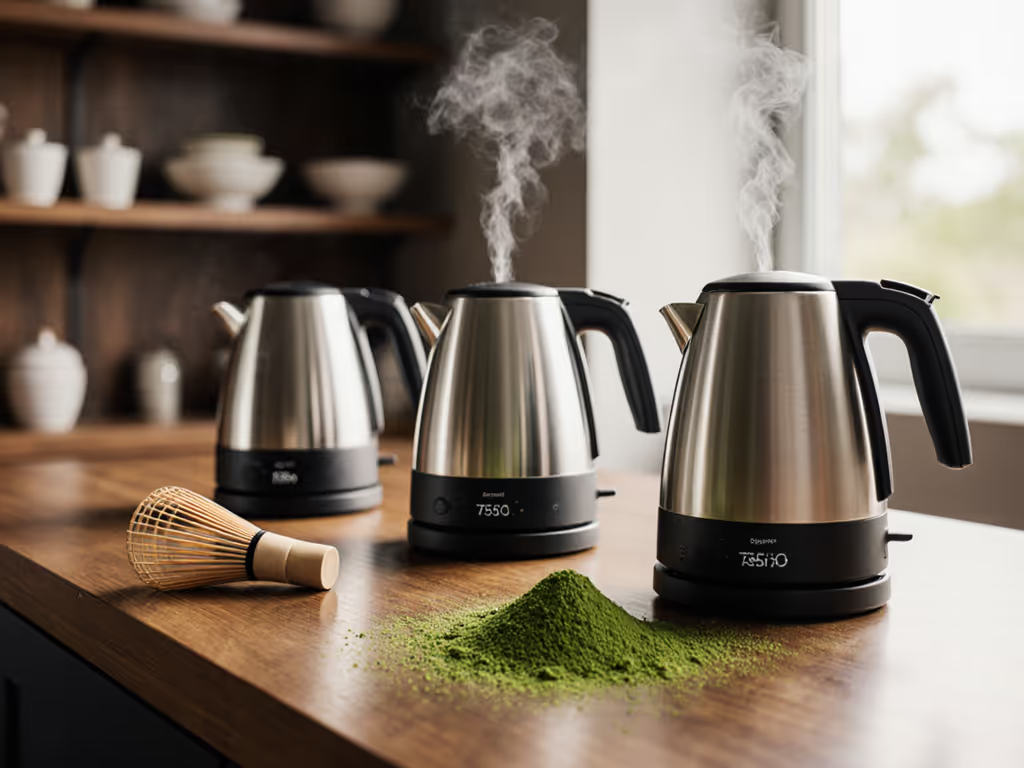
The insight that changed my precision expectations came from a bench test: three kettles, thermocouples strapped to each, boil logs over weeks. One kettle, marketed as "precision-engineered," spiked past setpoint by 3°C on every cycle and hunted back erratically. After descaling, overshoot dropped to 0.8°C. The kettle wasn't broken; it was scaled. Performance recovered completely. That's when descaling became urgent in my mind: a neglected kettle isn't just slow, it is thermally unstable. An indicator prevents that drift from happening in the first place.
Measure your water hardness. Log one boil cycle to establish baseline. Set a descaling schedule based on data, not guessing. Use white vinegar when the time comes. Monitor boil time after descaling to confirm recovery. That system (measurement first, then decision) works reliably, with or without a built-in indicator.
Related Articles